
Young Research Invited Talk 1
Topological Clustering-Based
3D Space Perception for Autonomous Robotic Systems
 Yuichiro Toda
Associate Professor, Faculty of Environmental, Life, Natural Science
and Technology, Okayama University, Japan
Abstract: Three-dimensional point cloud
processing is a fundamental technology for robots that perceive and
interact with real-world environments. However, point clouds are
unstructured, irregularly distributed, and often large in scale,
making efficient representation and processing an important
challenge. This invited talk begins with basic concepts and
representative techniques in 3D point cloud processing. It then
introduces topological clustering as an adaptive representation
framework in which point clouds are modeled by nodes and edges while
preserving geometric relationships. Based on competitive learning
approaches such as Growing Neural Gas and Adaptive Resonance Theory,
the framework enables flexible representation and learning of 3D
environments. Experimental examples illustrate how topological
representations can be applied to various aspects of robotic 3D
perception and provide a compact and adaptive basis for autonomous
robotic systems.
Biography: Yuichiro Toda received the B.E.,
M.E., and Ph.D. degrees from Tokyo Metropolitan University, Tokyo,
Japan, in 2011, 2013, and 2017, respectively. He was a Research
Fellow of the Japan Society for the Promotion of Science from 2013
to 2016. From 2017 to 2018, he was a Project Assistant Professor at
Tokyo Metropolitan University. From 2018 to 2023, he was an
Assistant Professor at Okayama University, Okayama, Japan. Since
2023, he has been an Associate Professor with the Faculty of
Environmental, Life, Natural Science and Technology, Okayama
University. His research interests include computational
intelligence, intelligent robotics, 3D point cloud processing,
topological clustering, and adaptive perception for autonomous
robots.
Young Research Invited Talk 2
Sample-Efficient Evolutionary
Multi-Objective Optimization
 Masaya Nakata
Associate Professor, Faculty of Engineering, Yokohama National
University, Japan
Abstract: Many practical engineering
applications require optimizing multiple objective functions
simultaneously. Moreover, practical objectives often require costly
black-box simulations, posing the challenge of deriving a set of
Pareto solutions with a limited computational budget. For such
expensive-to-evaluate problems, integrating surrogate models into
evolutionary algorithms has emerged as a highly sample-efficient
approach. This talk focuses on evolutionary optimization using
surrogate models and provides an overview of its fundamentals,
recent research trends, and current challenges. In particular, I
will focus on multi-objective and high-dimensional optimization,
which have attracted increasing research interest in recent years.
Biography: Assoc. Prof. Masaya Nakata
received the Ph.D. degree in informatics from the University of
Electro-Communications, Japan, in 2016. He is currently an Associate
Professor with the Faculty of Engineering, Yokohama National
University, Yokohama, Japan. His research contributions have
resulted in more than 30 journal papers and 60 conference papers
published in venues such as IEEE Transactions on Evolutionary
Computation, IEEE Transactions on Cybernetics, IJCAI, ACM GECCO,
PPSN, and IEEE CEC. Since 2019, he has been focusing on
surrogate-assisted evolutionary algorithms. His research interests
include surrogate-assisted evolutionary algorithms, evolutionary
machine learning, and data mining. He received the Young Scientists'
Award of the Commendation for Science and Technology by the Minister
of Education, Culture, Sports, Science and Technology in 2025.
Young Research Invited Talk 3
AI Applications to Biomedical
and Human Data Analysis: With a Focus on Medical Image Analysis
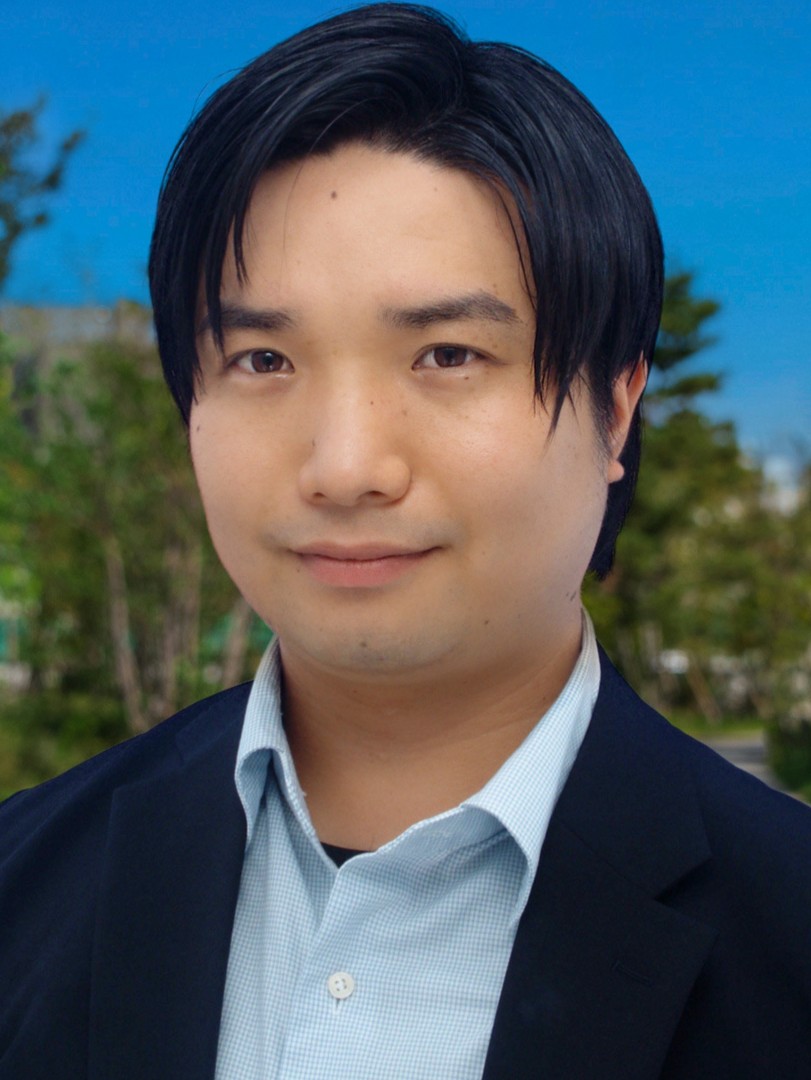 Kentaro Mori
Lecturer, National Institute of Technology (KOSEN), Maizuru College,
Electrical and Computer Engineering, Japan
Abstract: Artificial intelligence (AI),
particularly machine learning and deep learning, has advanced
rapidly in recent years. These technologies are widely used to
analyze human-related data, such as medical images, biosignals, and
videos. In biomedical and human data analysis, it is often difficult
to directly measure human states and motions, and their assessment
may rely on expert judgment. Various AI techniques, including
feature extraction, classification, segmentation, regression, and
pose estimation, are used to address these challenges. These
techniques enable automated prediction and diagnostic support,
quantitative analysis beyond visual assessment, and non-contact or
non-invasive estimation without specialized sensors. In this talk, I
will introduce our research on AI applications to biomedical and
human data analysis with a focus on medical image analysis. In
particular, I will present studies on non-invasive estimation and
diagnostic support using medical images, physiological motion
analysis, and human skill assessment using video.
Biography: Lecturer Kentaro Mori received
the master’s and Ph.D. degrees in Simulation Studies from the
University of Hyogo, Japan, in 2018 and 2021, respectively. From
2020 to 2023, he was an Assistant Professor at the National
Institute of Technology (KOSEN), Maizuru College, Japan. Since 2023,
he has been a Lecturer at the same institution. His current research
interests include medical image processing, medical image analysis,
and computer vision.
Young Research Invited Talk 4
Designing Devices and Systems
That Evoke Sensations and Emotions
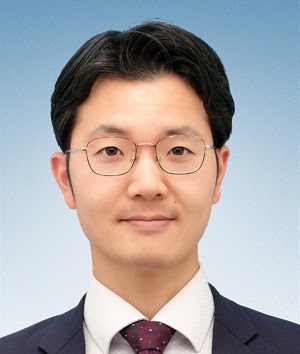 Koki Honda
Assistant Professor, Graduate School of Frontier Sciences,
Department of Human and Engineered Environmental Studies, The
University of Tokyo, Japan
Abstract: The speaker has been studied
kinesthetic illusions, a phenomenon in which vibratory stimulation
of human muscles creates the sensation that the body is moving. To
make these illusions stronger, we developed devices that reproduce
the muscle tension states and sensory inputs to the limbs that arise
during everyday movements, and succeeded in enhancing the illusion.
The speaker has also studied methods for eliciting pleasant emotions
through stroking stimulation of the skin. In this research, we built
a system that displays, in virtual reality, another person who
empathizes with the pleasantness of the stroking, so that users
experience the stroking as more pleasant. In this talk, the speaker
will present these studies and discuss how insights into everyday
human experience can guide the design of devices and systems that
evoke sensations and emotions.
Biography: Assis. Prof. Koki Honda received
his B.E. and M.E. degrees from Kyushu University in 2015 and 2017,
respectively, and his Doctor of Engineering degree from the same
university in 2020. From 2018 to 2020, he was a Research Fellow
(DC2) of the Japan Society for the Promotion of Science (JSPS). He
served as an Assistant Professor at Kyushu University from 2020 to
2023. Since 2023, he has been a Project Assistant Professor in the
Department of Human and Engineered Environmental Studies, Graduate
School of Frontier Sciences, The University of Tokyo. His research
interests include haptics, human–machine interaction, and human
informatics. In particular, he focuses on eliciting kinesthetic
illusions and pleasant emotions through mechanical stimulation
applied to the human body. A paper he co-authored received the Best
Student Paper Award at the 2025 IEEE International Conference on
Systems, Man, and Cybernetics (SMC 2025). He is a member of the
IEEE, the Japan Society of Mechanical Engineers (JSME), the Robotics
Society of Japan (RSJ), the Society of Biomechanisms Japan, and the
Virtual Reality Society of Japan (VRSJ).